
Overview
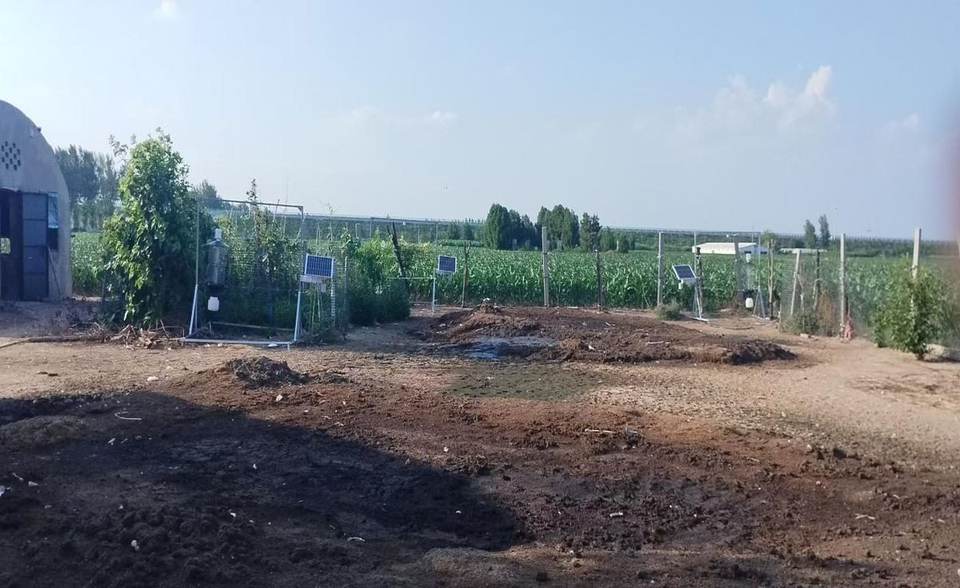
Building on the mechanistic ECO-Light experiment at Hebei University, we scaled up to two field transects that use the same light treatment and the same insect traps: one spanning China’s main natural grassland types and one spanning the real light-pollution gradient between cities and countryside in the Beijing–Tianjin–Hebei region. Data from all three platforms can be combined directly.
Network 1: Grassland transect
Night is an active time in grassland ecosystems. If dark nights are lit by artificial light, how do insect community composition and plant–insect interactions change — and does the same lamp have the same effect in different grasslands? From the Inner Mongolian steppe to the Tibetan Plateau, grasslands differ widely in climate, vegetation and biota, which may set their sensitivity to light at night.
- Light experiments at eight existing transect sites — Erguna, Xieertala, Xilinhot, Youyu, Urat, Hongyuan, Naqu and Baingoin — covering meadow steppe, typical steppe, desert steppe, alpine meadow and alpine steppe.
- Each site has a control and an ALAN treatment with five replicates each (10 plots), with a common target illuminance of 30 lx.
- Identical traps sample aboveground insect community composition, and plant–insect interactions are recorded in the same plots.
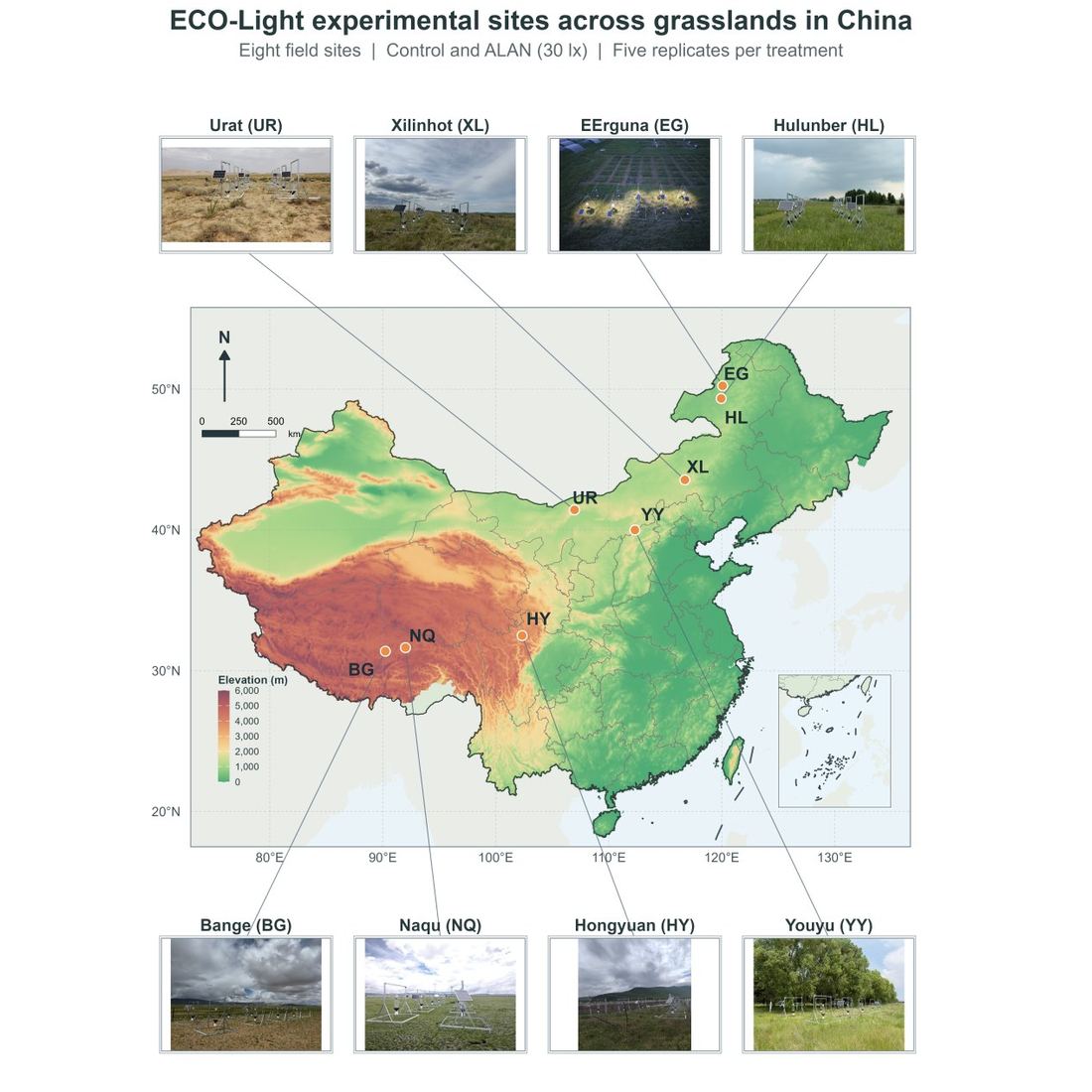
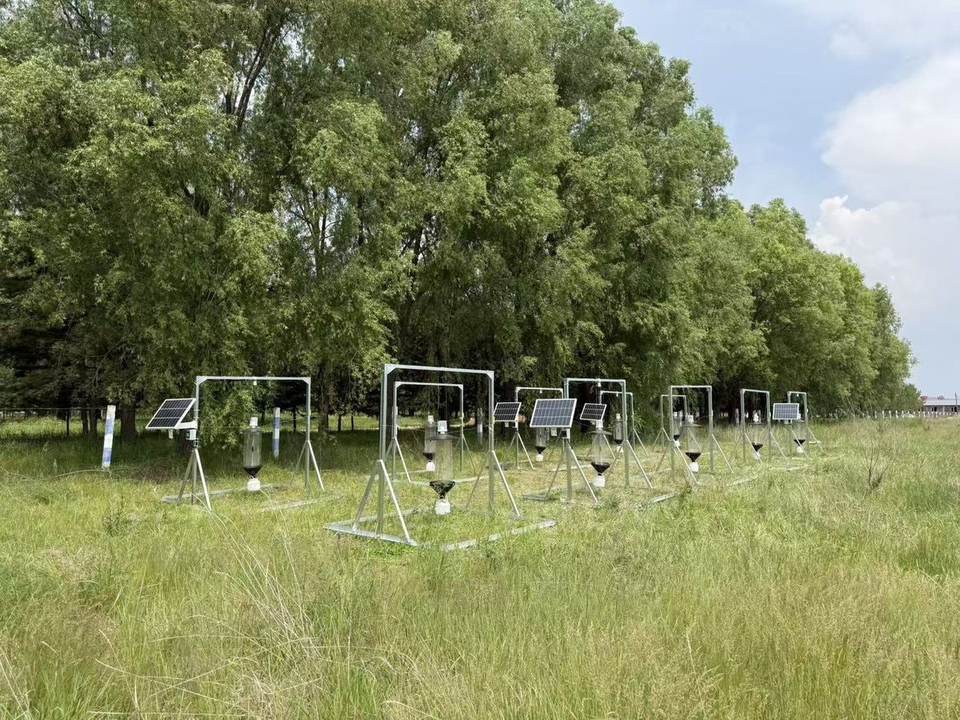
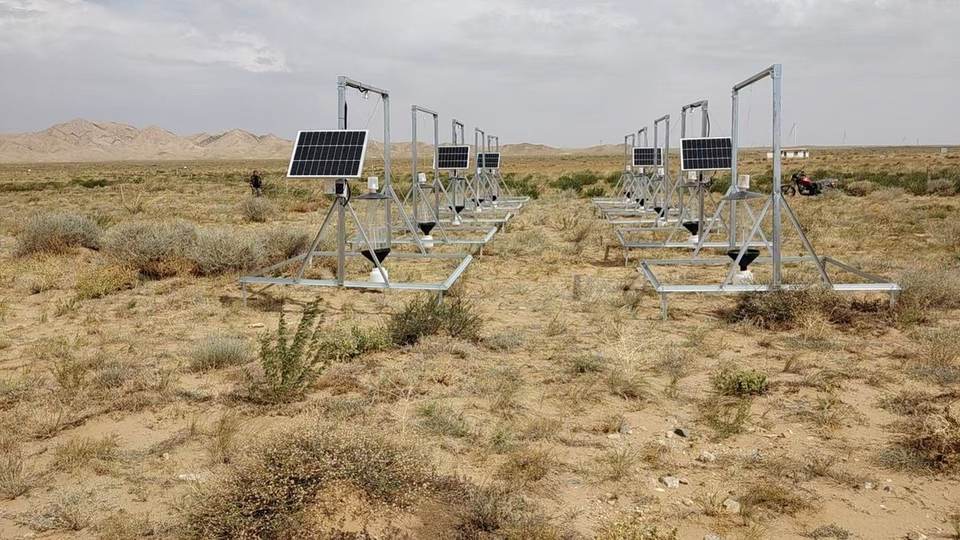
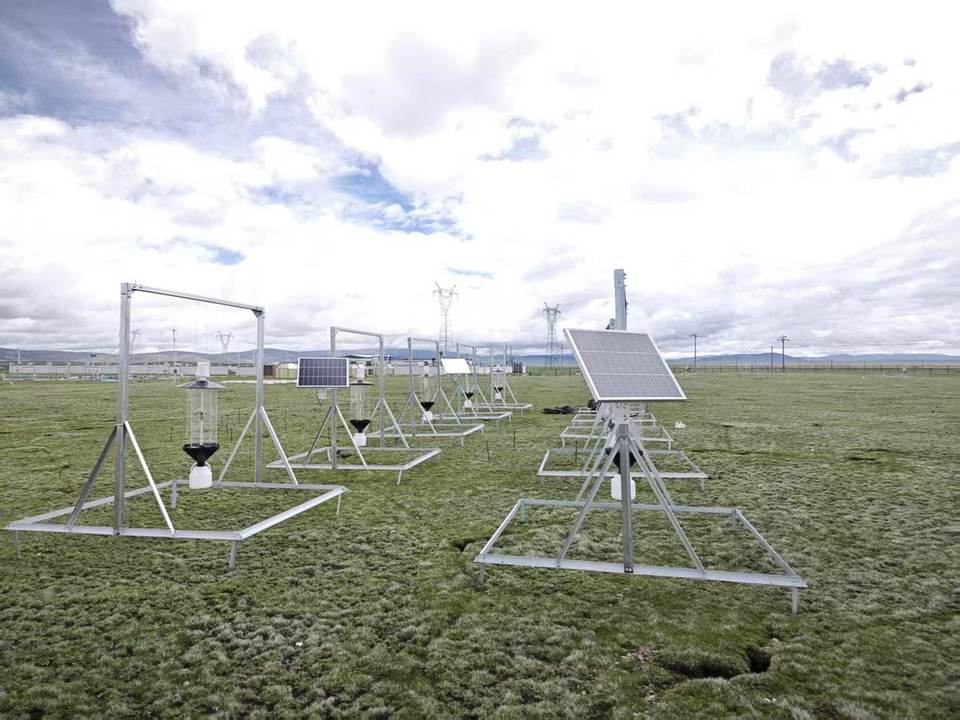
Research questions
- How consistent are the ecological effects of light at night across natural grasslands, and which grassland types respond differently?
- Which climatic and vegetation conditions make a grassland more sensitive to light at night?
- How does light at night alter plant–insect interactions, and does this differ among grassland types and environments?
Network 2: Urban–rural transect
Urbanisation makes night-time lighting much stronger along urban–rural gradients. How insect community composition and plant–insect interactions change across these background light levels needs coordinated multi-site observation.
- Twelve sites across Beijing–Tianjin–Hebei, six urban and six rural (Table 1).
- The same flight-interception and pitfall traps as ECO-Light, with synchronised weekly sampling and standardised protocols at all sites.
- Insects are identified in the lab to analyse how community composition and plant–insect interactions change along the urban–rural light gradient.
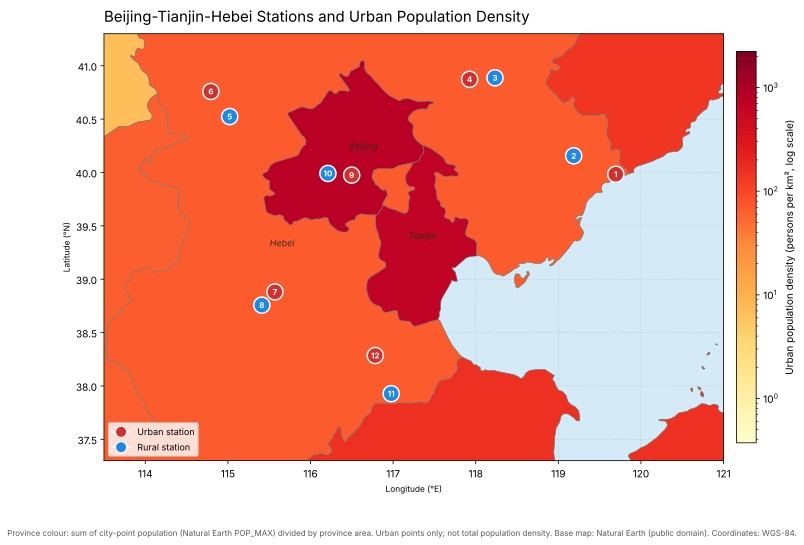
Table 1. Sites of the urban–rural transect (click to expand)
| Site | Type | Lon (°E) | Lat (°N) |
|---|---|---|---|
| Qinhuangdao Judicial Police Vocational College | Urban | 119.70 | 39.98 |
| Gaolougou Village, Qinglong County, Qinhuangdao | Rural | 119.19 | 40.16 |
| Chengde Applied Technology Vocational College | Urban | 117.93 | 40.87 |
| Shihuiyao Village, Xiabancheng, Chengde | Rural | 118.23 | 40.89 |
| Jixing Intelligent Equipment Co., Zhangjiakou | Urban | 114.79 | 40.76 |
| Xuanhua Service Area, Zhangjiakou | Rural | 115.02 | 40.52 |
| 1 Jiuxianqiao East Road, Beijing | Urban | 116.50 | 39.98 |
| Institute of Botany, CAS, Beijing | Rural | 116.21 | 39.99 |
| Cangzhou Normal University | Urban | 116.78 | 38.29 |
| Luguan Village, Nanpi County, Cangzhou | Rural | 116.98 | 37.93 |
| Hebei University, Qiyi Road campus, Baoding | Urban | 115.57 | 38.88 |
| Baituan Village, Qingyuan District, Baoding | Rural | 115.41 | 38.76 |
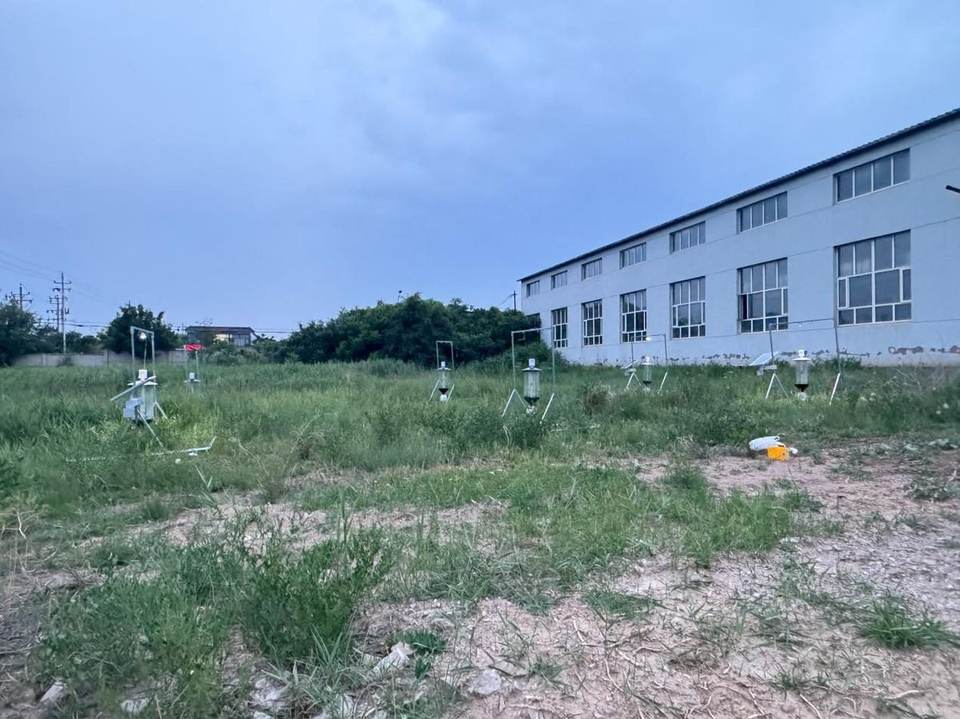
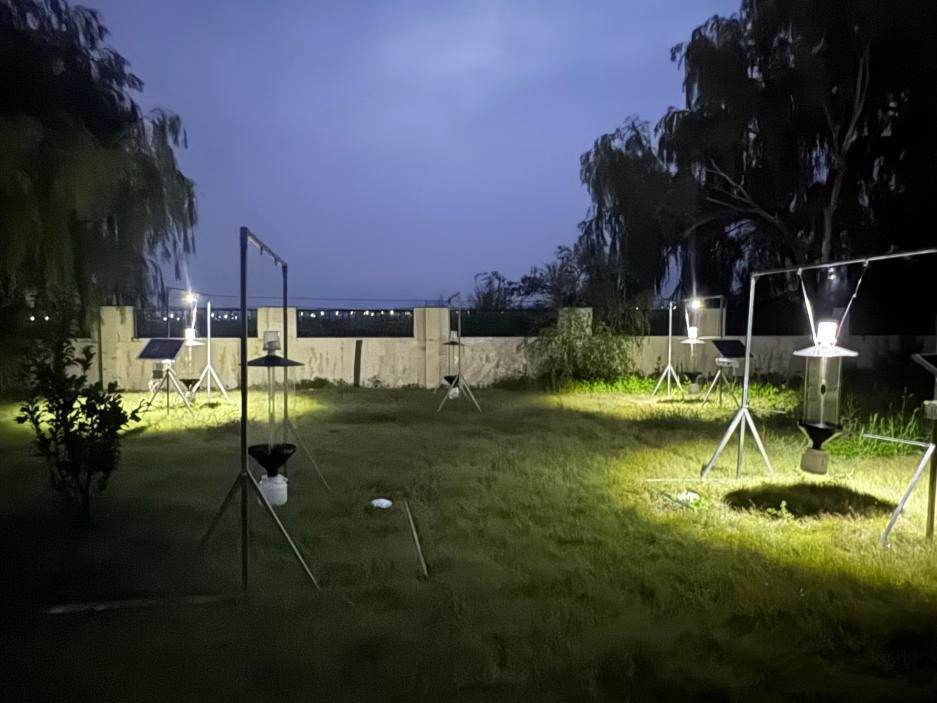
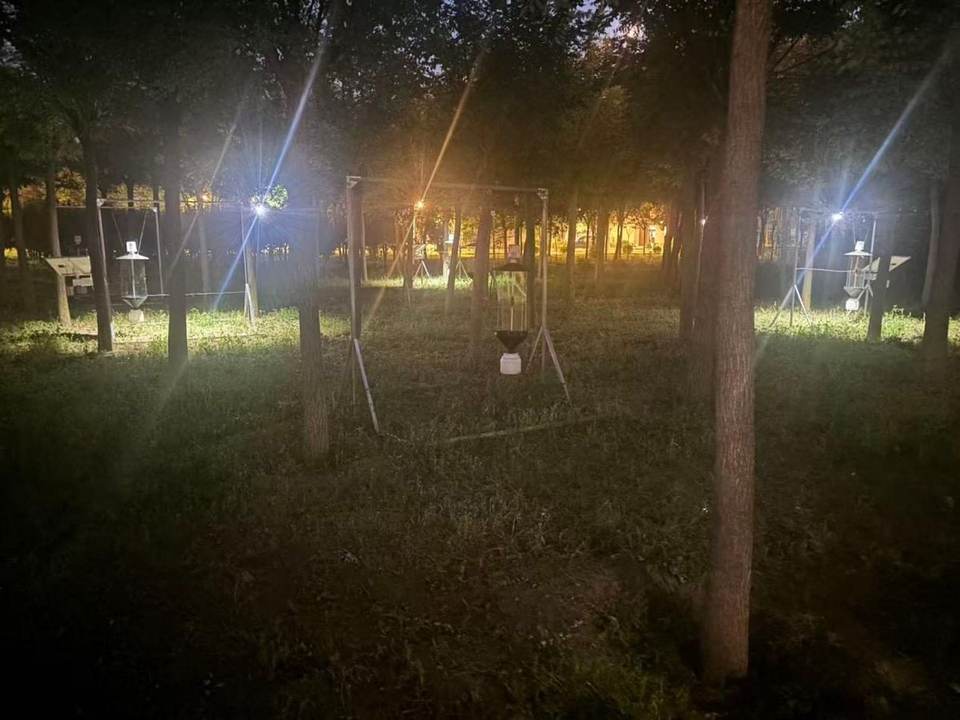
How the three platforms fit together
- ECO-Light (Hebei University): a controlled single-site experiment that reveals mechanisms.
- Grassland transect: a cross-regional experiment that tests how general the effects are and under which conditions they hold.
- Urban–rural transect: a survey of insect community composition and plant–insect interactions along real light-pollution gradients.
With identical sampling equipment, the three can be analysed together to understand how artificial light at night affects insect community composition and plant–insect interactions.
Team
Haiyang Zhang · Fei Zheng · Xuerong Di · Jing Wang · Lingfei Yu · Huajie Liu · Dasheng Sun · Xingguo Han