
Overview
Research on ecosystem carbon sinks has focused on vascular plants in forests, grasslands and wetlands, while small organisms such as mosses and lichens have long been overlooked. Lichens are familiar pioneer organisms, yet they contribute to carbon inputs and to the formation, stabilisation and decomposition of soil organic matter, and could help increase ecosystem carbon uptake.
L-BGC studies lichens from three angles — carbon allocation and transformation in living lichens, the decomposition of lichen necromass and its controls, and the effects of lichens on soil carbon fractions — to understand their role in the carbon cycle and in restoring degraded ecosystems.
Experimental design
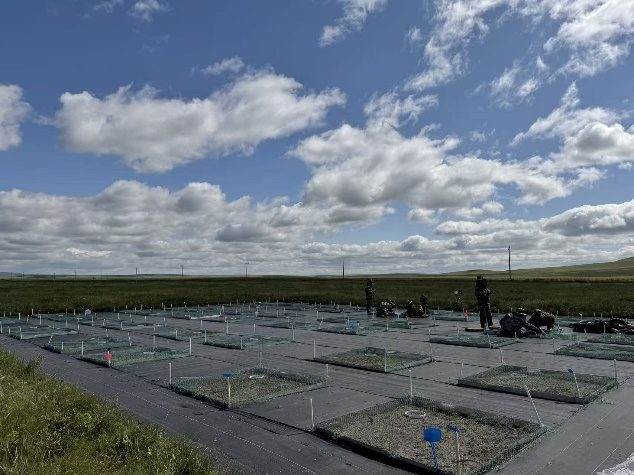
- Established in 2024 at the Erguna Forest-Steppe Ecotone Research Station, Chinese Academy of Sciences.
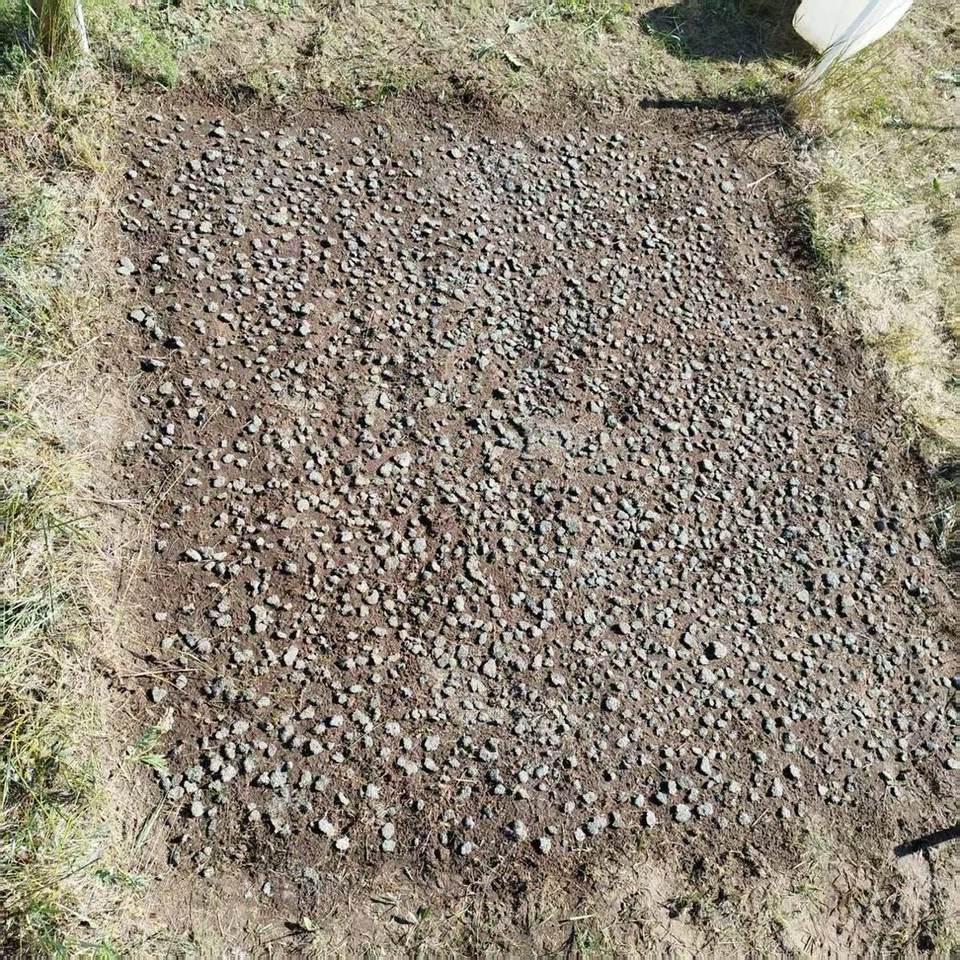
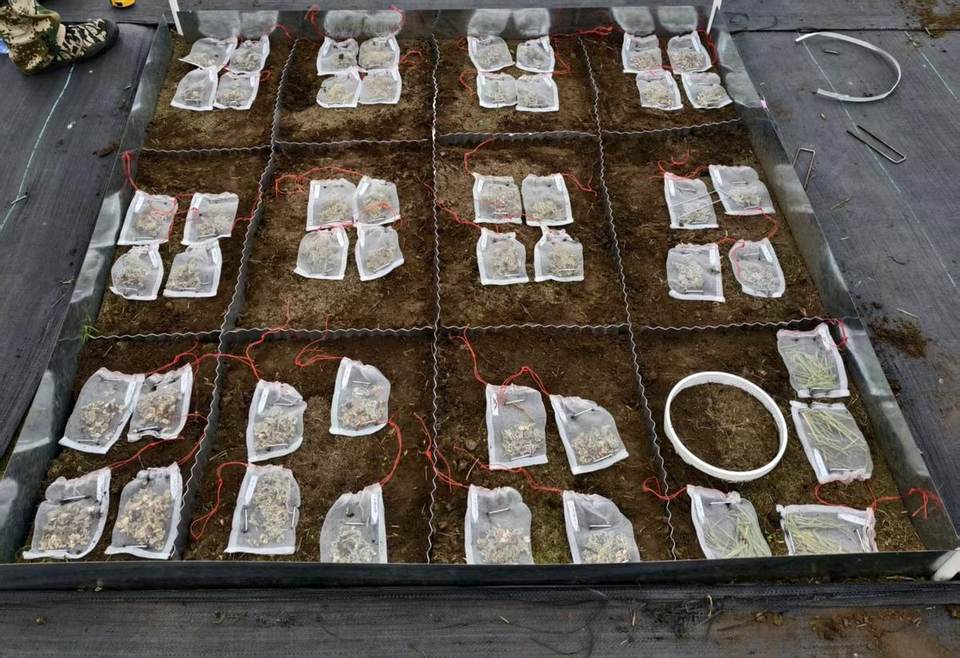
- Randomised block design: 2 lichen states (living vs. dead) × 4 cover levels (0, 30, 50 and 70%) × 6 replicates = 48 plots of 1.5 m × 1.5 m.
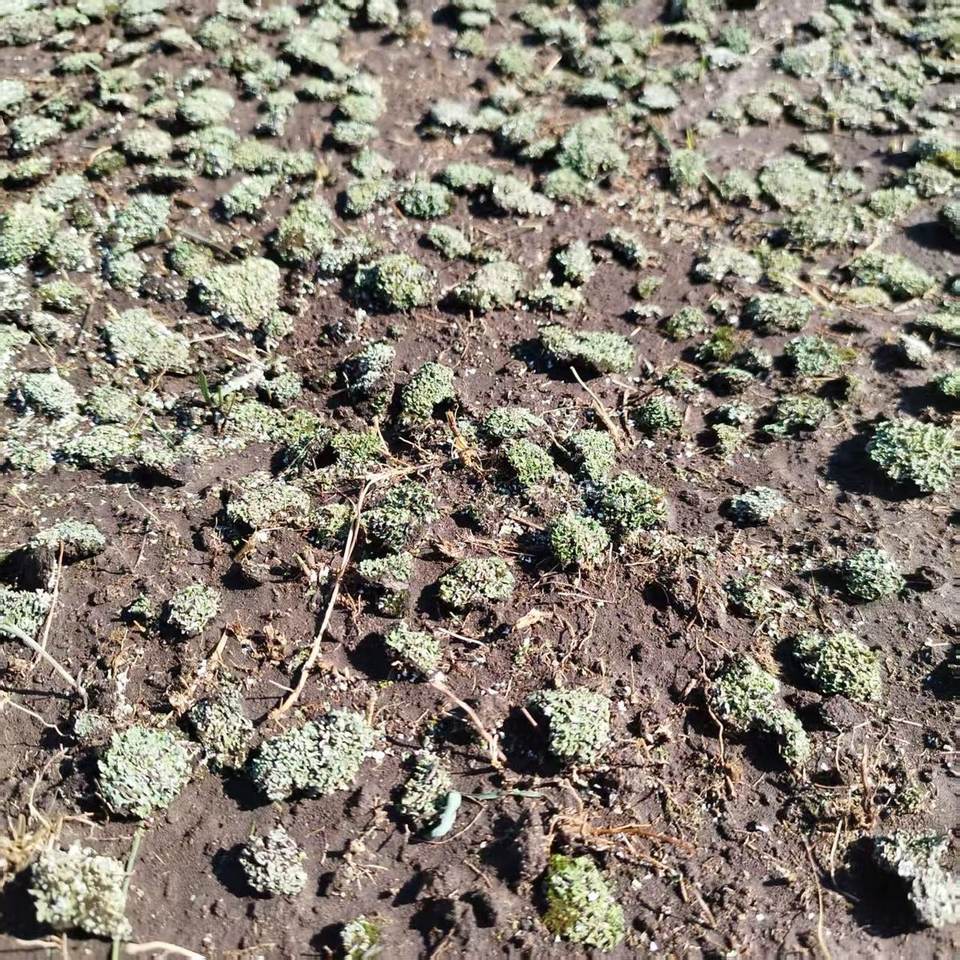
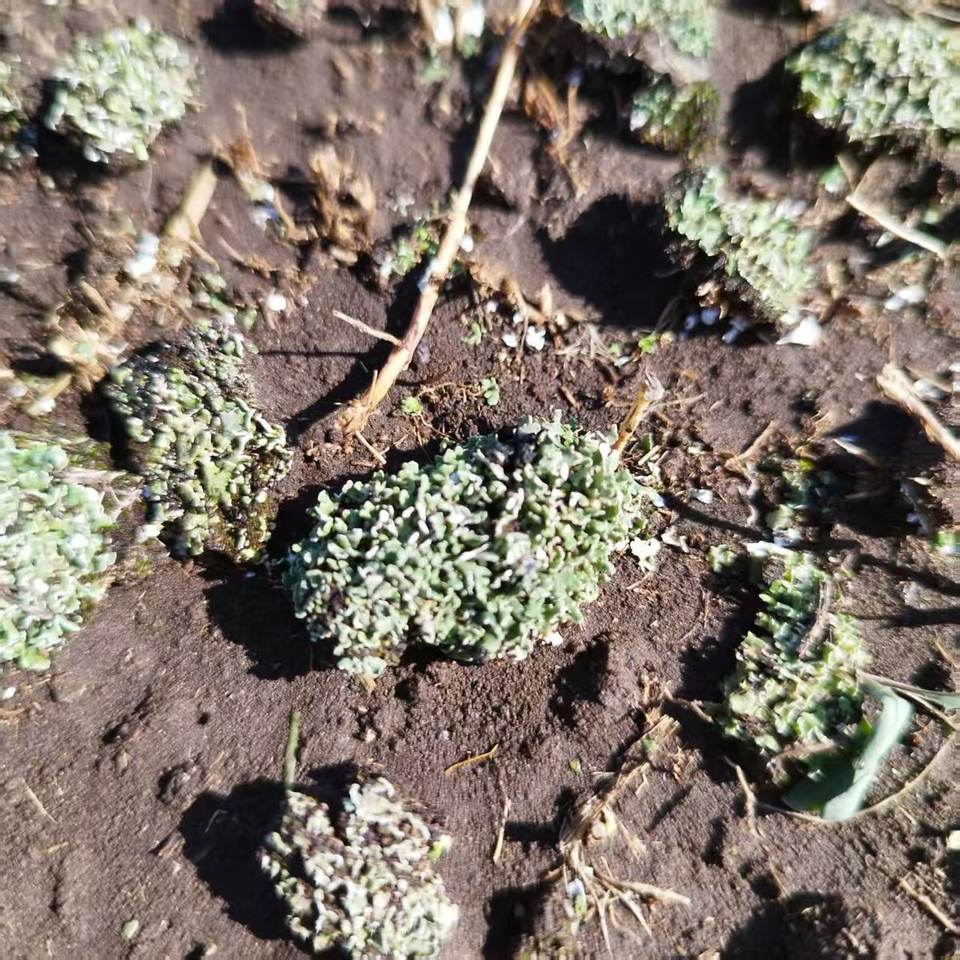
- Before transplanting, the resident vegetation (dominated by the grass Leymus chinensis), litter and roots were removed; the transplanted species is the locally dominant lichen Cladonia strepsilis.
- We monitor how lichens affect soil temperature and moisture, ecosystem respiration, and soil organic carbon fractions and their stability. A laser snow-depth sensor records how winter snow cover affects lichen decomposition, and respiration collars are measured regularly during the growing season.
New experiments in 2026
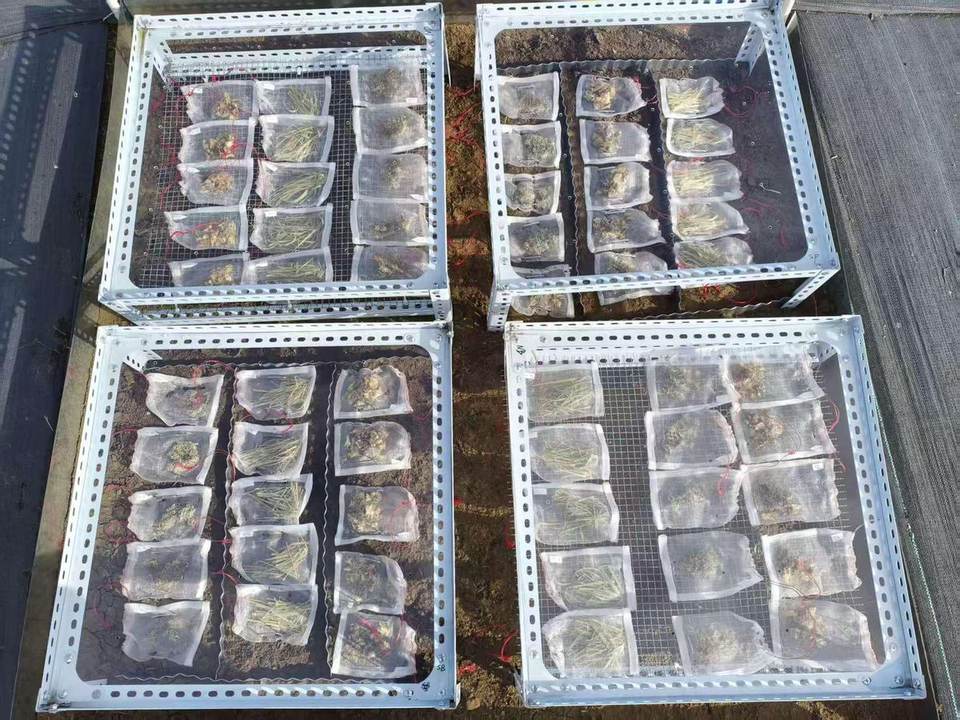
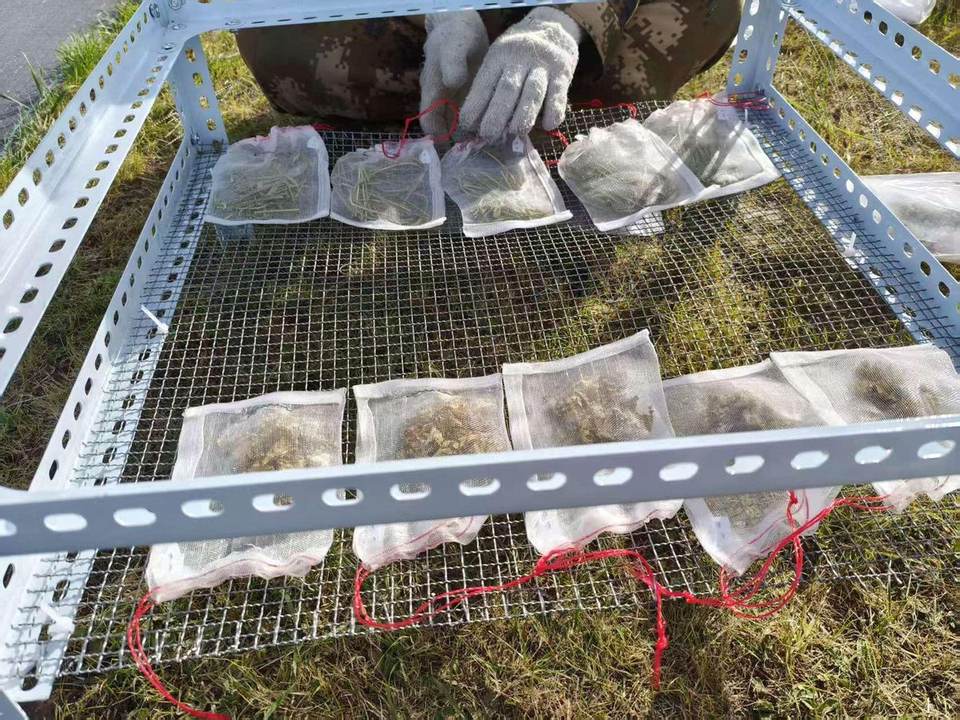
- Lichen diversity and mixed-litter decomposition — two nitrogen-fixing and two non-nitrogen-fixing lichen species were combined along a diversity gradient (1–4 species), with four replicates and four harvests, to test how necromass diversity affects decomposition and its chemical and microbial controls.
- UV radiation and lichen decomposition — litter of two lichen species, with Leymus chinensis as a vascular-plant reference, was exposed under UV-transmitting or UV-blocking filters, with and without soil contact. Mass loss, C and N fractions, melanin, phenolics and soil microbes are measured to test whether lichens decompose through a lignin-independent “photo-biological” pathway that differs from vascular plants.
Research questions
- Across cover levels, do living and dead lichens increase soil organic carbon, and how do they change the distribution and stability of soil carbon fractions?
- How do living and dead lichens affect ecosystem respiration across cover levels, and through which mechanisms?
- How does the diversity of lichen necromass affect mixed-litter decomposition in temperate steppe, and what chemical and microbial processes control it?
- How does UV radiation affect the decomposition of lichen litter, and what drives this effect?
Team
Huajie Liu · Haiyang Zhang · Jing Wang · Xingguo Han
Funding
- National Natural Science Foundation of China (General Program): Effects of living and dead lichens on soil carbon fractions in a meadow steppe