
Overview
Industrial and agricultural expansion has sharply increased reactive nitrogen, making atmospheric nitrogen deposition a major driver of global change. Meadow steppe in Inner Mongolia receives little background deposition and is therefore highly sensitive to nitrogen inputs. Deposition contains many nitrogen compounds, yet most experiments simulate it with a single form such as ammonium nitrate or urea, and rarely consider how grassland management such as hay-making alters its effects.
This long-term experiment was designed by Prof. Xingguo Han and established in the Hulunbuir grassland in 2014, with Assoc. Prof. Guojiao Yang managing the platform in its early years. It combines five common nitrogen compounds, six addition rates and mowing to test how changing nitrogen availability affects grassland structure and function.
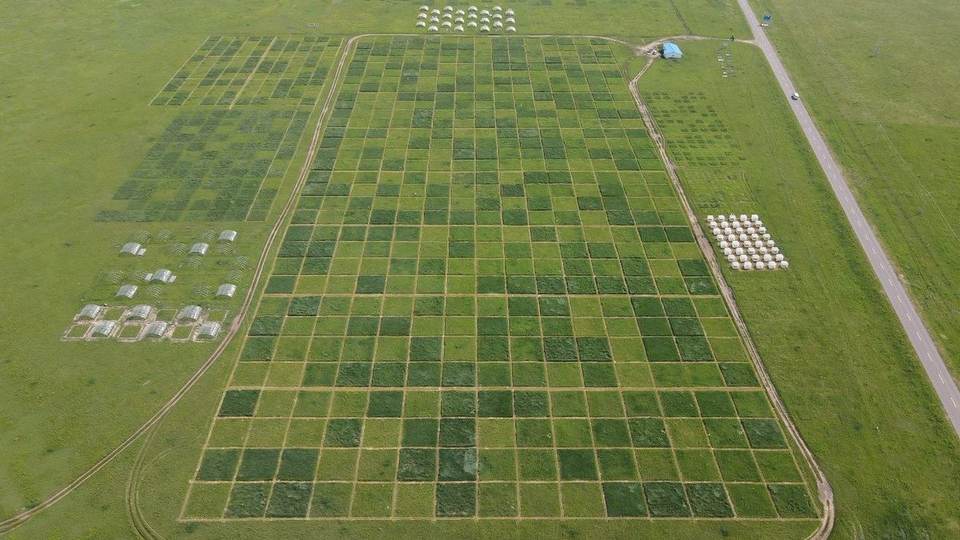
Experimental design
- Completely randomised block design: 6 N rates (0, 2, 5, 10, 20 and 50 g N m⁻² yr⁻¹) × 5 compounds (ammonium nitrate, ammonium sulfate, ammonium bicarbonate, urea and slow-release urea) × 2 management regimes (mown vs. unmown) = 60 treatments.
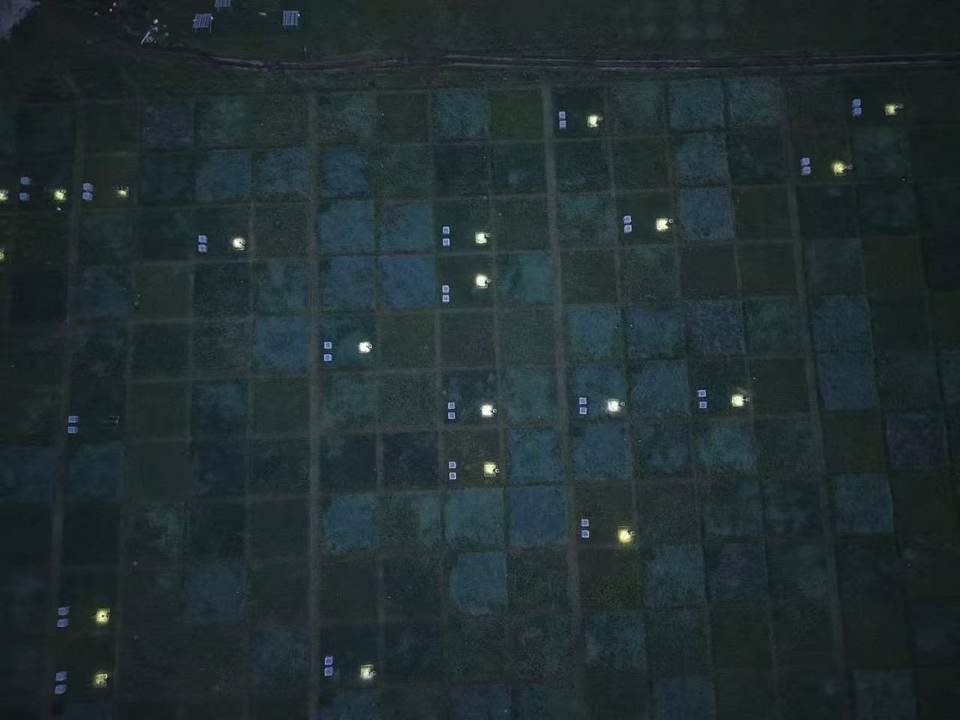
- 8 blocks and 480 plots of 10 m × 10 m, with 2 m between blocks and 1 m between plots.
- Mowing is done once at the end of August, leaving ~10 cm stubble to mimic local hay-making; cut biomass is removed.
- Nitrogen is mixed with fine sand and broadcast once a year at green-up; the first addition was on 20 May 2014.
Our work on the platform
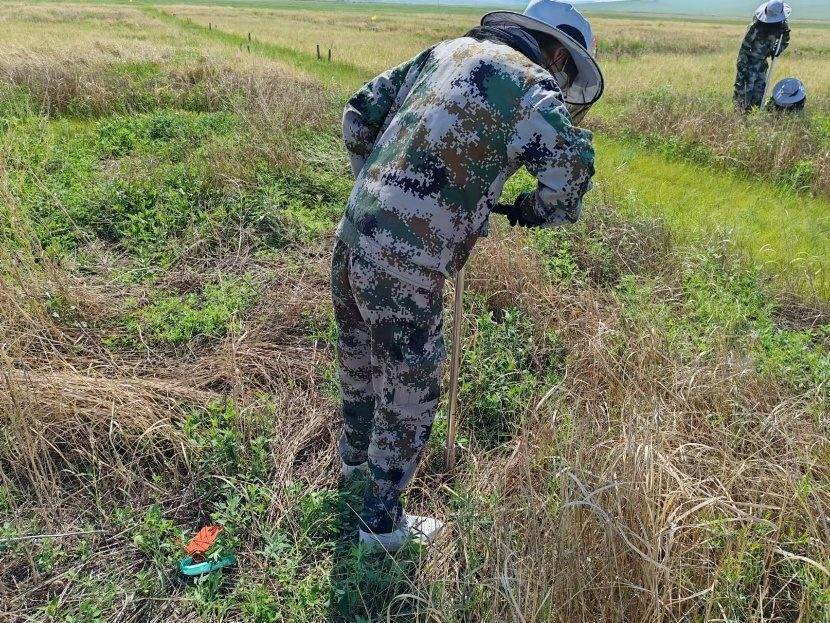
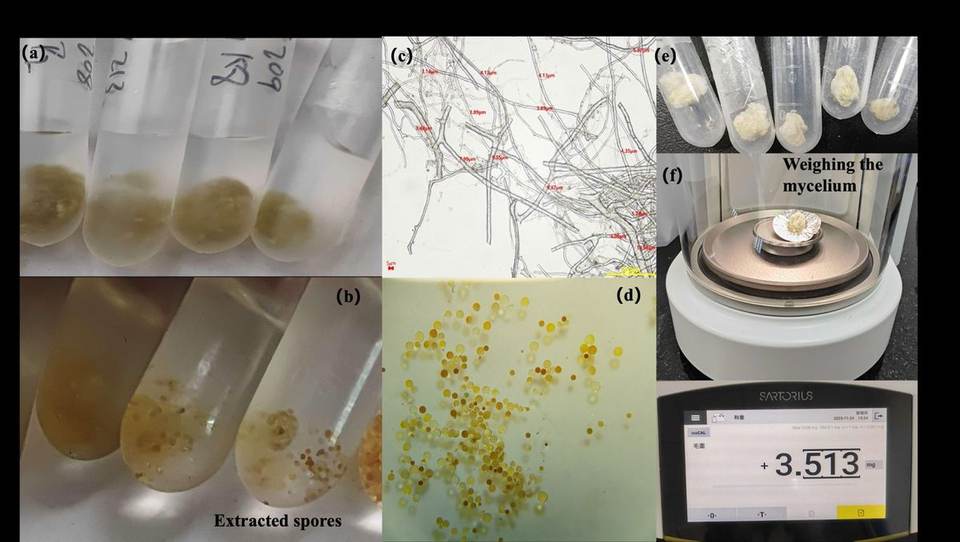
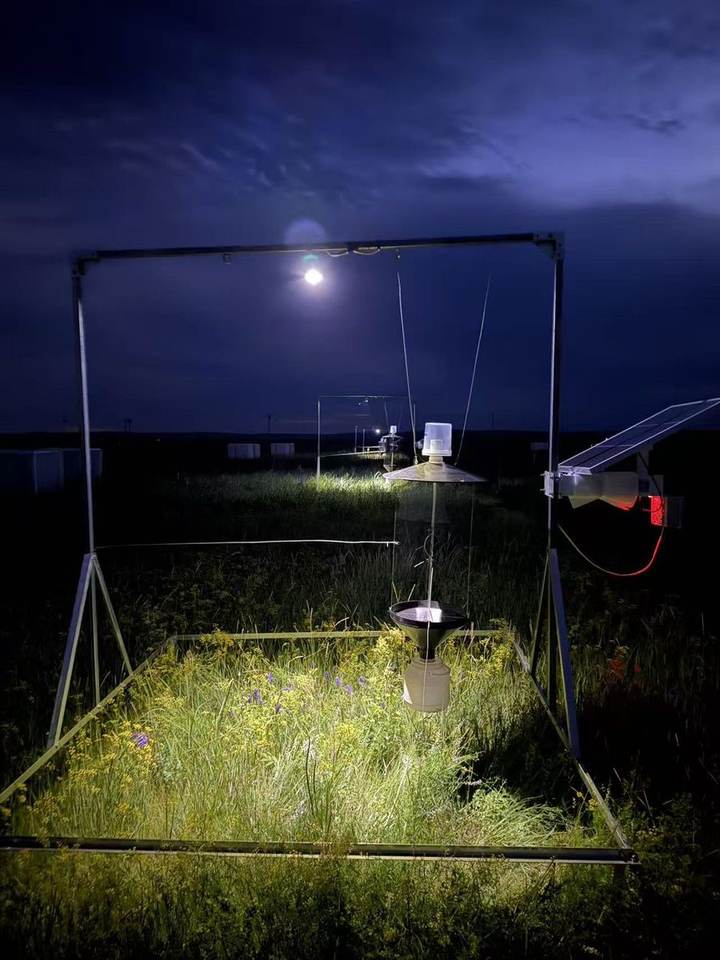
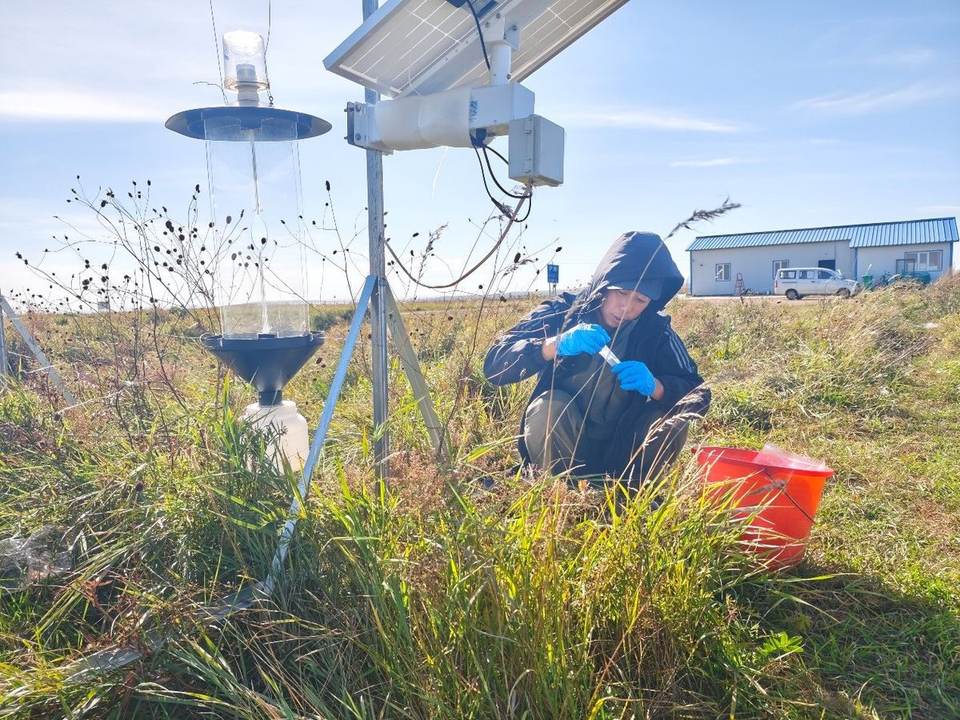
Since 2023 our group has studied arbuscular mycorrhizal (AM) fungi on this platform, including extracting and quantifying hyphae and spores. In 2026 we nested an artificial light at night (light pollution) treatment within the nitrogen treatments to study how the insect–plant–soil–microbe system responds to the combined global changes of nitrogen deposition and light pollution.
Research questions
- Do nitrogen compounds and addition rates differ in their effects on plant communities and ecosystem functions?
- How does mowing modify the ecological effects of nitrogen addition?
- How does nitrogen enrichment affect AM fungi and the soil carbon processes they mediate?
- How do interactions among insects, plants, soil and microbes change under nitrogen deposition combined with artificial light at night?
Team
Haiyang Zhang · Liangchao Jiang · Xingguo Han
Funding
- Talent Introduction Program, Hebei University